
In this post you will learn and know what is long tail keywords. Why they are important and how to use them to increase your website traffic. If you want to bring the right visitors to your website or blog you should understand long tail keywords.
What Are Long Tail Keywords?

Long tail keywords are longer and more specific search that people type into search engines. They usually have three or more words and clearly describe what the user wants.
Why Are Long Tail Keywords Important?
Long tail keywords are important because they help you reach people who know exactly what are looking for. These users are more like to click stay on your website and take action.
- Less competition
- Easier to rank in search results
- More targeted visitors
- Higher chance of conversion
- Better focus for your content
- Very good for new websites
How Long Tail Keywords Bring Better Traffic
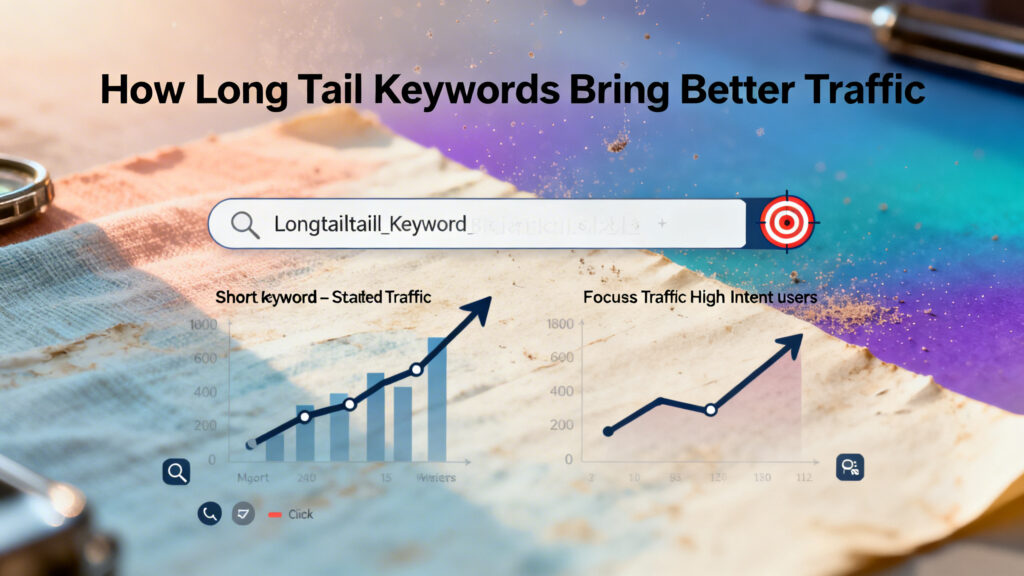
Let’s understand this with a simple idea.
If someone searches for “laptop” they may just be browsing. If someone searches for “best budget laptop for graphic design under $700” they are serious and close to making a decision.
Long tail searches show clear intent. That is why they often convert better.
Where Long Tail Keywords Come From
Long tail keywords often come from real questions and detailed searches.
- Problem based searches
- Product comparison searches
- How to searches
- Location based searches
- Feature specific searches
Examples
- How to fix slow android phone
- Best budget camera for YouTube beginners
- Healthy diet plan for busy workers
How to Use Long Tail Keywords in Content
Use long tail keywords naturally in your content
- In the title
- In the headings
- In the first paragraph
- In subheadings
- In image alt text
- In the meta description
- Naturally inside the main content
Common Mistakes to Avoid
- Repeat the same keyword too many times
- Choose keywords with no clear search
- Write very short or low quality content
- Ignor related keyword variations
- Pick phrases that do not match your topic
Final Thoughts
Long tail keywords are one of the best strategies for new and growing websites. They are easier to rank for bring more targeted visitors and often give better results. Instead of chasing only big keywords focus on specific search term that match real user needs.